
Why real photos, real people and real experiences matter more than ever
Have you noticed that social media is starting to look a bit same-samey?
It seems like every second post or advertisement features a perfectly polished person, an impossibly beautiful meal, a pristine office or some kind of lifestyle image that looks just a little too good to be true. And we are getting good at telling when they’re AI-generated.
AI has become incredibly good at creating images that look convincing, but there’s an interesting shift happening as we become more familiar with them. We’re starting to recognise that not everything we see online is real, and that changes the way we respond to what we’re seeing.
It reminds me of the advice we’ve been giving businesses for years about stock photography.
Remember when real photos were better than stock photos?
There was a time when stock photography was everywhere. You’d see the same smiling business people, the same generic office, the same perfectly arranged coffee cup and the same suspiciously enthusiastic handshake appearing across hundreds of websites.
Eventually, we started telling businesses to use their own photographs instead. Show us your actual team. Photograph your actual premises. Take pictures of your actual products and your actual work.
Why? Because people wanted to see who they were dealing with. A real photograph gave a business personality and helped potential customers feel like they were getting to know the people behind it.
I think AI-generated imagery is creating a very similar situation. We’re now able to create almost any image we can imagine, but that doesn’t necessarily mean we should.
When the comments become the story
I recently came across an AI-generated advertisement for a ski resort, and the comments were fascinating.
Rather than simply admiring the image, people were calling it out as AI-generated. They were pointing out the flaws and referring to it as “AI slop”. One of the things people noticed was a typo in the resort’s own logo that had been created by the AI.
Think about that for a moment.
The business had created an advertisement to promote itself, presumably hoping people would look at the image and think, “That looks amazing. I’d love to go there.”
Instead, the comments became a conversation about whether the image was AI-generated and the mistakes it contained. The advertisement had accidentally given people something else to talk about, and this is one of the problems with using AI to represent a real business. Even when the image looks beautiful at first glance, people are becoming increasingly good at spotting the little things that don’t make sense.
A strange sign. A distorted object. Something written incorrectly. A logo that isn’t quite right. A person with something odd about their hands.
Once someone spots one mistake, they start looking for the next one. Suddenly, the focus isn’t on your business. It’s on the fact that the image isn’t real.
Your customers want to see what they’re actually buying
Imagine you’re choosing somewhere to eat.
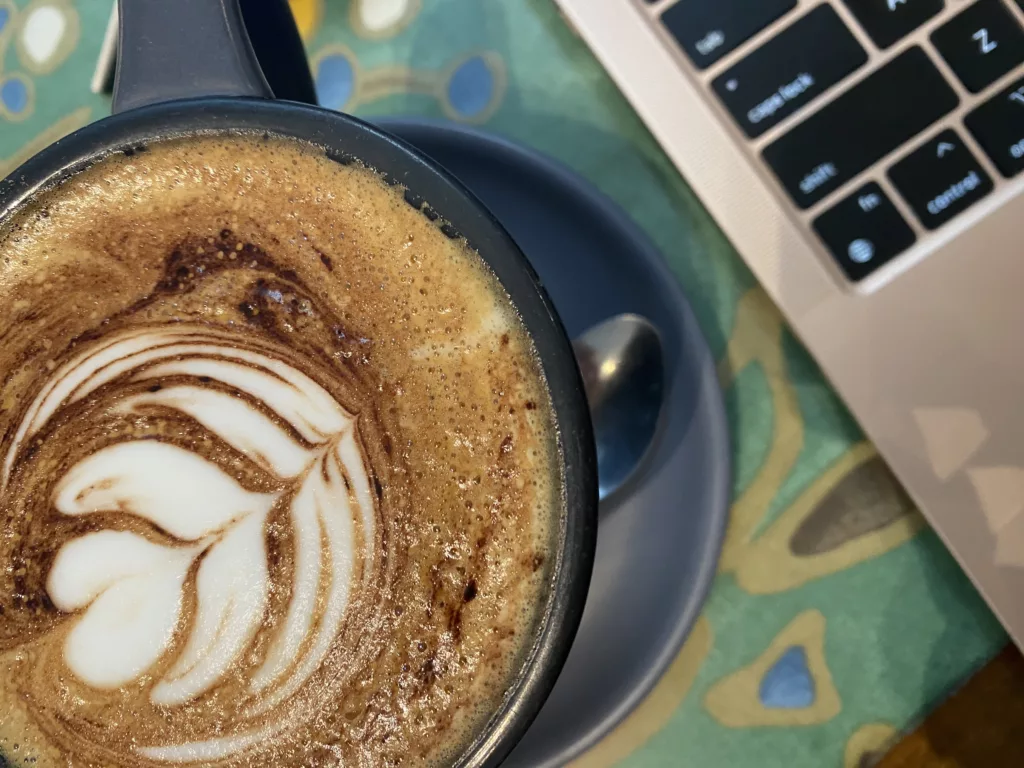
Would you rather see an AI-generated picture of a perfect-looking meal, or an actual photograph of the dish that arrives at the table?
If you’re booking a holiday, would you rather see an AI-generated winter wonderland or photographs of the actual rooms, slopes, facilities and views?
If you’re hiring a cleaning company, would you rather see an AI-generated spotless house or photographs of the actual results from a real cleaning job?
The same applies to almost any business.
If you have a café, show us your food. If you run a resort, show us your resort. If you’re a photographer, show us your actual work. If you’re a builder, show us the homes you’ve actually built. If you sell handmade products, show us the products you’ve actually made.
The closer someone is to making a buying decision, the more important this becomes. People want to know what they’re actually going to get.
AI has a place. It just shouldn’t replace reality
I’m not against using AI in business. There are plenty of useful ways it can save you time, particularly when you’re a small business owner doing everything yourself.
It can help you brainstorm ideas, organise your thoughts, write a first draft, come up with content ideas or help you work through a problem. But there’s a difference between using AI to help create your marketing and using AI to manufacture the reality you’re trying to sell.
Your marketing doesn’t need to look like a computer has spent three hours creating the perfect version of your business. It needs to look like your business.
Your business doesn’t need to look perfect
One of the things I like about real photographs is that they don’t always look perfect.
Your café might have a busy counter in the background. Your team member might be laughing instead of posing. Your product might have a tiny imperfection. Your resort might have a cloudy day. Your freshly cleaned house might still have someone’s shoes sitting by the door.
That’s okay.
In fact, those little details can make a photograph feel more believable because they reflect reality We’ve spent years being told that our businesses need to look polished online. But perhaps we’ve reached a point where everything is becoming so polished that the polished stuff is starting to blend together.
A real photograph can cut through that.
So, how do you keep your marketing real?
You don’t need a huge marketing budget to keep your content feeling genuine. The aim isn’t to make everything look homemade or avoid good design. It’s about making sure the things you’re showing and saying actually come from your business.
Take your own photographs
Your phone is probably capable of taking perfectly good photographs for everyday marketing. Photograph your products, your workspace, your team, your customers’ results and the things that happen during a normal day.
They don’t need to look like a magazine shoot. They need to be real.
Invest in a photographer when you can
Professional photography can be a worthwhile investment, particularly for your website, but you don’t need to have a photographer on hand every week.
A single photoshoot can give you a library of high-quality images of your actual business, people, products and premises that you can use for months across your website, social media and advertising.
Use Canva if you can’t afford a graphic designer
Canva is a fantastic option for small businesses that don’t have the budget to have every social post professionally designed.
Choose a simple template, add your own branding and, most importantly, use your own photos and your own words. You don’t need every post to look like it was designed by an agency. You just want it to look consistent, clear and like your business.
Hire a graphic designer to make your brand stand out
If your budget allows, working with a graphic designer can take your branding beyond the limitations of a Canva template. A designer can create a visual identity that is specific to your business, from your colours and fonts through to your social media graphics and printed materials. You don’t need every post professionally designed, but having a strong, recognisable brand makes it much easier to create your own content while still looking consistent.
Show the behind-the-scenes stuff
People like seeing how things actually happen. Show the kitchen before the doors open, the team setting up, the messy stage before the finished result or the process behind a product.
These little glimpses into everyday business life can be much more interesting than another perfectly posed promotional image.
Use real customer reviews and testimonials
Let your customers tell people what it’s like to buy from you or use your service.
Genuine experiences are far more useful than another carefully generated marketing claim, particularly when someone is trying to decide whether to trust you.
Share real before-and-after results
This is particularly useful for service businesses. Whether you’re a cleaner, landscaper, builder, hairdresser or photographer, showing the actual result of your work gives potential customers something concrete to look at.
Don’t create the perfect imaginary kitchen. Show us the kitchen you actually cleaned.
Use real video
A quick phone video of you explaining something, walking through your business or showing a project in progress can be much more engaging than another perfectly polished graphic.
It doesn’t need to be professionally produced to be useful. In many cases, the fact that it feels informal is exactly why people connect with it.
Share customer-created content
If customers tag your business in photos or videos, ask whether you can share them.
There’s something particularly valuable about seeing a real person using your product, visiting your venue or experiencing your service. They’re showing potential customers what the experience actually looks like.
Hire a web designer to bring it all together
Your website is often where people go when they’re ready to find out more about your business, so it’s worth making sure it reflects the real business behind it. A good web designer can take your real photographs, branding, content, testimonials and stories and bring them together into a website that is easy to use and genuinely feels like you. AI can help generate content and images, but it can’t replace the knowledge of your business, your actual work or the experience you provide.
You probably already have plenty of content
You don’t necessarily need to organise an expensive photoshoot every time you want to post something on social media.
Start taking photographs as you go about your normal work. Photograph the meal before it leaves the kitchen. Take a photo of the finished cleaning job. Capture the team working. Photograph a new product arriving. Take a quick video of something interesting happening behind the scenes.
Your phone is probably capable of taking perfectly good photographs for most of your everyday marketing.
And if you do have the budget for professional photography, use it to photograph the real business rather than creating a fictional version of it.
Those photographs can then be used across your website, social media, Google Business Profile, email marketing and advertising.
You’re creating a library of genuine content that actually belongs to your business.
In an age of AI, real might become your point of difference
We’re going to see more and more AI-generated imagery in advertising and social media. It’s inexpensive, fast and increasingly convincing, so it’s not going away.
That makes your real content more valuable, not less.
When someone is considering spending money with you, they’re looking for reassurance that you’re legitimate, that you know what you’re doing and that they’ll get what they’re expecting.
Because when almost anything can be generated, something genuinely real becomes worth paying attention to.